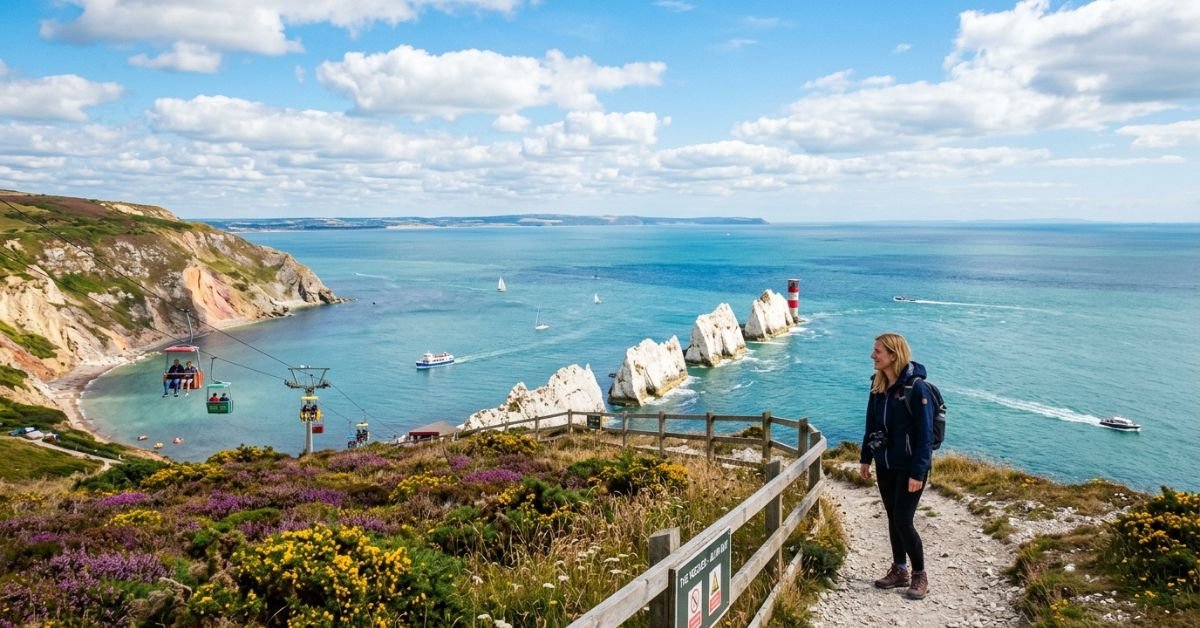
There is no single perfect month for an Isle of Wight holiday. Summer brings beach weather and a full events calendar, while quieter seasons offer open paths and a gentler pace. The best time depends on what you want to do. Price, daylight, weather and crowd levels all deserve consideration.
Ferry services operate throughout the year, but timetables and demand vary. Check current crossings, live travel information and booking options through Wightlink before fixing accommodation. Booking earlier is sensible around school holidays and major events. Flexible travellers may find better value outside peak dates.
Spring: colour and fresh air
Spring is a rewarding time for walking and gardens. Woodland flowers, new leaves and longer days transform the landscape. Temperatures are usually more comfortable for active trips than during hot summer weather. Rain and cool winds remain possible.
March can feel quiet, with some seasonal businesses operating reduced hours. April and May often provide a stronger balance of daylight and availability. Easter and bank holidays can be busy. Check attractions individually rather than assuming everything is open.
Wildlife watchers may enjoy the activity of the season. Coastal and wetland habitats can be particularly interesting. Keep dogs away from nesting birds and young animals. Binoculars and patience are more useful than approaching closely.
Spring packing should include waterproofs, layers and sturdy shoes. Sunshine can still be strong near the coast. Carry sun protection even on a cool day. Flexible clothing makes sudden weather changes easier to handle.
Summer: beaches and events
Summer offers the longest days and the widest range of visitor activities. Beaches, outdoor dining and evening walks become central to many holidays. Families can make full use of resort facilities. Major events add energy and entertainment.
July and August are usually the busiest period. Accommodation, ferries and popular restaurants can fill early. Road traffic and parking demand also increase. A realistic itinerary will feel better than trying to cross the Island repeatedly.
Beach visitors should check tides, bathing guidance and local dog restrictions. Sun cream, hats and water are essential. Coastal breezes can hide the strength of the sun. Children require close supervision near the sea.
Event visitors should understand how large gatherings affect the wider journey. Allow more time and confirm transport arrangements. Book meals where necessary. If crowds are not part of the appeal, choose a base away from the event area.
Autumn: walking and local flavour
Early autumn can provide an excellent compromise. The busiest family period has passed, but the days may still be mild. Woodlands begin to change colour. Walking routes and viewpoints often feel more spacious.
September can retain a summer atmosphere without the same peak intensity. October brings stronger autumn colour and more variable weather. Some attractions reduce hours as the season progresses. Always check before making a long journey.
Autumn suits food-focused trips. Farm shops, pubs and restaurants provide shelter when conditions turn. Seasonal produce can add interest to menus. Booking remains wise at small venues with limited opening days.
Walkers should expect mud, fallen leaves and earlier darkness. Carry a torch and finish remote routes before sunset. Strong winds can make exposed cliffs unsafe. Choose inland woodland or town walks when the coast is unsuitable.
Winter: peace and dramatic scenery
Winter reveals a quieter side of the Island. Seafronts, villages and coastal viewpoints can feel wonderfully peaceful. Accommodation may offer better value outside festive dates. A short restorative break can work even without conventional beach weather.
Daylight is limited, so plan one main outing rather than an ambitious list. Weather can disrupt outdoor plans. Build the trip around flexible walks, cafés, pubs and indoor attractions that are confirmed open. Keep checking forecasts and travel updates.
Some seasonal businesses close or operate restricted hours. This is not a problem when expected. Choose a town with year-round services or self-catering facilities. Reserve dinner rather than assuming there will be several late options.
Winter seas can be impressive, but storm watching must be done from a safe distance. Avoid piers, exposed sea walls and cliff edges in severe conditions. Follow local warnings. No photograph is worth entering a dangerous area.
Choose by interest
Beach holidays are most likely to suit late spring and summer, although British weather never guarantees sunshine. Walkers may prefer spring or early autumn. Garden enthusiasts should investigate seasonal highlights before choosing dates. Festival visitors need to work from confirmed event calendars.
Couples seeking quiet may enjoy May, September or a winter weekend. Families are often tied to school holidays and should reserve early. Dog owners may find more beach access outside seasonal restriction periods. Always verify the rules for each beach.
Budget-conscious visitors can compare midweek and off-season stays. However, the cheapest date is not automatically the best value if desired attractions are closed. List the three experiences that matter most. Choose the season that makes those experiences most likely.
The Island changes character throughout the year. Summer is bright and sociable, autumn feels rich and spacious, winter is calm, and spring brings renewal. Each season offers a valid reason to visit. Match your expectations to the conditions and you can enjoy the Isle of Wight at almost any time.
Whichever season you choose, check the forecast close to departure rather than packing for the calendar alone. A sunny October day may feel warmer than a windy afternoon in June. Layers, waterproof footwear and sun protection cover most possibilities. Sensible preparation lets you appreciate the conditions you actually encounter.
Think about daylight when booking travel. A daytime arrival can make an unfamiliar onward journey easier, particularly in winter. Summer evenings offer more flexibility for delays or spontaneous stops. Match the crossing to the pace you want on the first and last day.
Keep one adaptable day in a longer stay. Use it for the beach when sunshine arrives or an indoor attraction when rain sets in. This prevents the forecast from controlling the whole holiday. Seasonal travel works best when the plan has room to move.