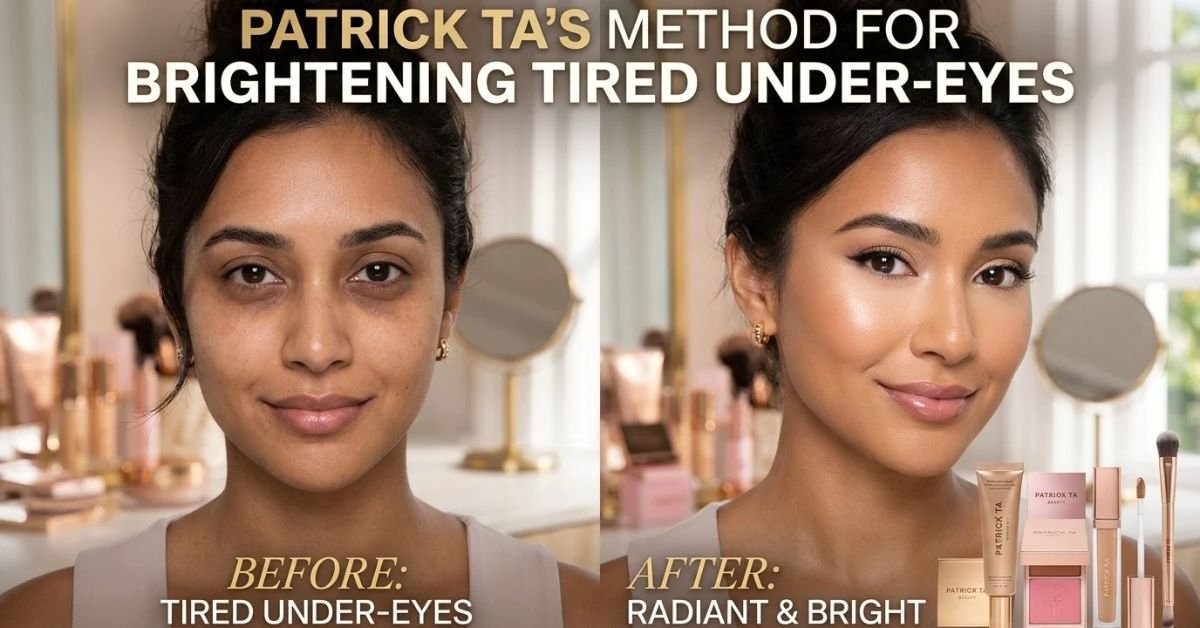
Tired eyes are one of the most common complaints in any makeup chair. Late nights, screens, and genetics all leave their mark, and the instinct is to cover the evidence with as much concealer as possible. Patrick Ta’s approach is the opposite. The right shade, a small amount of product, and careful placement do more to brighten the face than heavy coverage ever could.
Choosing a Brightening Shade That Won’t Look Ashy
The most common under-eye mistake is reaching for a shade that is far too light. A very pale concealer over a darker shadow does not cancel it out; it creates a gray, ashy cast that can make the eyes look even more tired. The goal is brightness, not whiteness.
For most people, the ideal brightening shade is one to two shades lighter than their foundation, with an undertone that matches their skin. Warm and olive skin tones usually look best with peachy or golden concealers, which neutralize blue and purple shadows. Fair and cool skin tones tend to suit soft pink or neutral undertones. Deeper skin tones often need a richer apricot or orange tone to counteract darkness without turning chalky.
If you are unsure where to start, use a quiz to find my concealer shade based on your skin depth, your undertone, and how you plan to use the product. A guided match removes the guesswork and saves you from buying shades that never quite work.
Lighting matters when testing, too. Check your under-eye in natural daylight before committing, since bathroom lighting often hides an ashy cast that becomes obvious outdoors.
Your eye makeup affects how bright the under-eye looks as well. Dark shades on the lower lash line can make shadows appear deeper. If you are wearing a smoky look, keep the bottom lash line soft by choosing lighter tones from your eyeshadow palettes, or skip it entirely.
Why Less Product Looks More Awake Under the Eyes
The skin under the eyes is thinner than the rest of the face and moves constantly. Thick layers of concealer have nowhere to go, so they crease, cake, and emphasize texture, which is the opposite of an awake look.
Instead, apply a small dot of concealer at the inner corner and another at the darkest point of the shadow. Leave the outer area mostly bare unless it needs help. Blend with gentle tapping motions so the product melts into the skin, and if you still see darkness, add a second thin layer only on that spot.
The right makeup tools make a difference here. A small, dense brush or a damp sponge presses product into the skin without moving it around, so the concealer looks like skin rather than a layer sitting on top.
Finish by setting only where creasing happens. A light press of powder directly under the lash line keeps everything in place while leaving the rest of the under-eye luminous. A touch of cheek color just above the concealer adds warmth and pulls the brightness upward.
Final Thoughts
Brighter under-eyes come from precision, not volume. Choose a shade that matches your undertone, use less product than you think you need, and place it only where shadows are deepest. The result is fresh, natural, and genuinely awake.