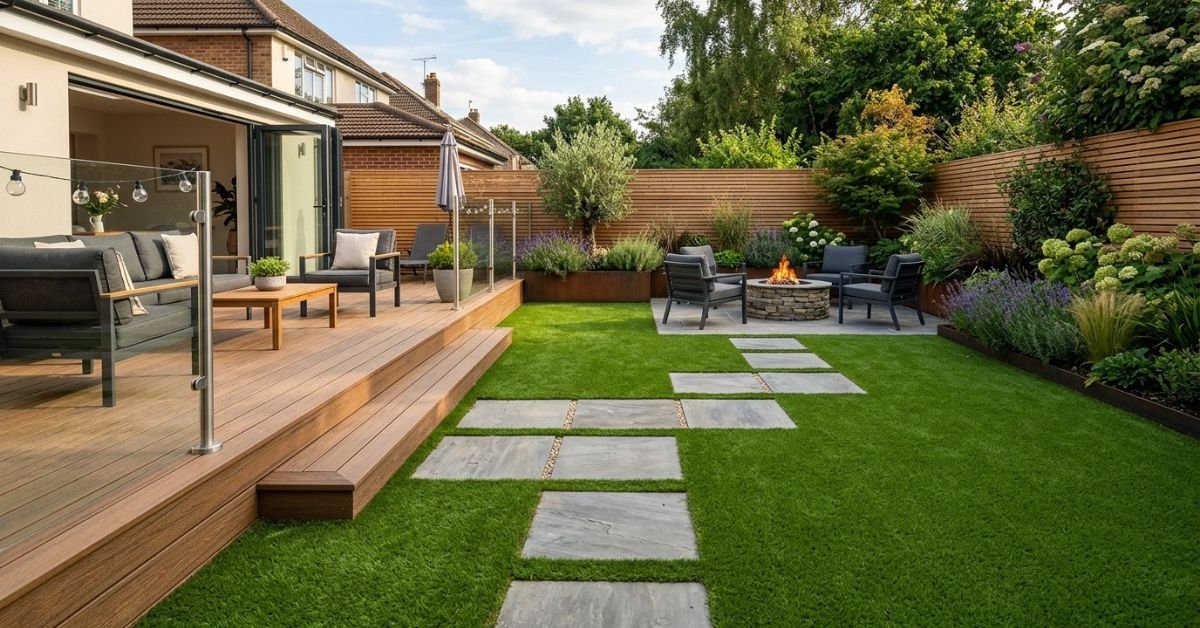
Combining artificial grass with paving and decking is an effective way to create a practical, attractive, and low-maintenance garden. Artificial grass adds softness and year-round colour, paving creates durable paths and dining areas, while decking brings warmth and structure.
The challenge is making all three surfaces look intentional. Poor level changes, weak edging, blocked drainage, or mismatched colours can make the finished garden look untidy. A successful design starts with planning how the space will be used, how water will move, and how each material will meet the next.
This guide explains how to combine artificial grass with paving and decking in UK gardens, from choosing a layout to creating durable transitions.
Divide the Garden into Practical Zones
Before choosing materials, decide how each part of the garden will be used. Treat the outdoor area like a set of separate rooms.
Artificial grass works well for play areas, pet zones, decorative lawns, and informal seating. Paving is better for dining spaces, barbecue areas, and busy walkways. Decking can define a raised lounge, soften the transition from the house, or create a platform around a garden room.
Zoning helps you select the right material for each activity and prevents the design from feeling cluttered.
Choose a Layout That Fits the Space
The best layout depends on the garden’s size, shape, and style.
Small gardens usually look better with one main lawn section and one hard-surface zone. Too many materials can make a compact space feel busy. Larger gardens can support curved borders, wide pathways, or several defined areas.
Popular artificial grass and paving ideas include stepping stones set into turf, a paved patio framed by grass, or turf strips between large slabs. Artificial grass can also sit beside a raised deck or meet a flush-level seating platform.
Straight lines suit contemporary gardens, while curves create a softer look.
Coordinate Colours and Textures
Artificial grass, paving, and decking should contrast without competing.
Warm timber tones work well with olive or mixed-green turf. Grey composite decking can create a modern look beside dark paving and neatly cut grass. Light sandstone or porcelain paving can brighten a small garden.
Homeowners choosing artificial grass Warwickshire services should compare turf, paving, and decking samples together to ensure the colours and textures suit the overall garden design.
View samples together in daylight before ordering. Artificial grass changes in sun and shade, while paving may darken when wet. Two or three main tones usually create a connected result.
Plan the Finished Surface Heights
One of the most important details is how artificial grass meets paving or decking.
Uneven transitions can create trip hazards, collect debris, and make the installation look unfinished. Ideally, the top of the grass pile should meet the adjoining surface neatly without a large step.
Each material needs a different base. Paving may require a sub-base, mortar bed, and slab thickness. Decking usually sits on joists or a frame. Artificial grass normally needs excavation, compacted aggregate, a laying layer, and the turf.
Calculate these layers before installation. Adjusting levels during groundwork is much easier than correcting them later.
Build the Right Base for Each Material
Artificial grass, paving, and decking should not be placed over the same unprepared ground.
Artificial grass normally sits over a compacted, free-draining aggregate base. Paving needs a stable sub-base and suitable laying system to prevent movement. Decking requires a secure frame, adequate support, and ventilation.
The finished surfaces must work together so no section settles and creates gaps along the joins.
Completing the paving and decking before installing the turf usually creates cleaner levels and stronger edges.
Plan Drainage Across the Whole Garden
Drainage should be considered across the full design rather than separately for each surface.
Artificial grass is normally permeable, but paving may direct extra runoff towards it. If the lawn sits lower than surrounding hard surfaces, it can receive more water than the sub-base can manage.
Observe where water travels after rain. Create gentle falls in paved areas so water moves towards a drain, permeable border, or soakaway. Do not direct runoff towards the house or a low section of artificial grass.
Decking should allow water and air to move beneath the boards. Turf installed beside a deck must not block ventilation or drainage access.
In clay-heavy UK gardens, channel drains, French drains, or a deeper permeable base may be necessary.
Use Strong Edging Between Surfaces
Edging gives artificial grass a secure fixing point and keeps base materials separated.
Without proper restraint, the turf edge may lift and aggregate may move. Suitable options include treated timber, composite boards, metal edging, concrete kerbs, or stable paving edges.
The grass should be cut accurately and fixed firmly against the edge. Avoid stretching it too tightly because this may strain the backing or cause movement later.
Concealed edging creates a seamless look, while visible borders can become part of the design.
Create Turf Strips Between Paving Stones
Artificial grass between paving slabs can create a clean, geometric look.
The slabs must be stable, level, and evenly spaced. Each turf strip still needs a prepared base and secure edges. Simply placing offcuts into gaps can lead to lifting, unevenness, and poor drainage.
Wider strips are easier to secure and maintain than very narrow lines. Keep the pattern simple and the spacing consistent.
Frame a Paved Patio with Artificial Grass
A paved patio surrounded by artificial grass is a practical choice for family gardens.
Paving provides a firm surface for tables, chairs, planters, and barbecues, while the turf keeps the rest of the garden soft and green. It also prevents heavy furniture from flattening the fibres.
Create a stable border around the patio. If the paving sits higher than the grass, use a clearly defined step or edging strip.
Barbecues, fire pits, and outdoor heaters should remain on the paved section because heat can damage synthetic fibres.
Combine Artificial Grass with Decking
Decking and artificial grass create a strong visual contrast between green fibres and timber tones.
A deck can sit beside the house, at the rear, or around a garden room, with turf connecting it to other zones. Using luxury artificial grass beside well-finished timber or composite decking can create a more refined and coordinated outdoor space.
Make sure the deck frame is secure and provides a straight fixing edge for the turf. Timber decking needs airflow to reduce moisture problems, while composite boards require correct drainage and expansion gaps.
If artificial grass is being laid over existing decking, inspect the boards for movement, rot, and trapped water first.
Match Surfaces to Foot Traffic
Use each material where it performs best.
Heavy dining furniture and frequently used routes are better placed on paving or decking. Artificial grass works well for open lawn areas, children’s play, and casual seating, but constant pressure can flatten the pile.
Add stepping stones or a paved path if people regularly cross the lawn to reach a shed, gate, or seating area. For busy gardens, choose durable turf with strong backing and good fibre recovery.
Avoid Common Installation Mistakes
Common problems include:
- Using too many colours or materials
- Ignoring finished surface heights
- Directing paving runoff onto a low lawn
- Installing turf against loose slabs
- Failing to provide secure edging
- Blocking ventilation beneath decking
- Leaving narrow turf strips unsecured
- Covering cracked paving or rotten decking
Addressing these issues before installation protects both the appearance and lifespan of the garden.
Maintain the Finished Garden
Remove leaves and debris from artificial grass, brush flattened fibres, and keep drainage areas clear. Clean paving when needed, and wash decking to prevent dirt and algae buildup.
Check the joins between surfaces because soil, moss, and debris often collect along the boundaries. Keeping these areas clear helps preserve neat edges and effective drainage.
Final Thoughts
Learning how to combine artificial grass with paving and decking is mainly about balancing appearance with function.
Use paving beneath dining furniture and on busy paths, decking for defined seating areas, and artificial grass where softness and year-round colour are most valuable.
Plan the layout, surface heights, drainage, bases, and edging before work begins. With strong foundations and clean transitions, artificial grass, paving, and decking can create a practical UK garden that looks attractive in every season.