Benefits of Residential Yoga Teacher Training Courses
There are so many ways to learn yoga. Whether you want to perfect yourself, or teach professionally, every school offers a great variety of courses. However, the most common roadmap to become a complete yogi, is to take 200 hours training. It is the foundation, which will help you enhance your practice and start teaching as well. If you are just exploring, you will likely come across different courses of the same hours. Some will be offline, some online, some hybrid and so on. Yet, most prefer the residential course. Why so? And with the 300 Hour Yoga Teacher Training in Rishikesh trailing after foundational courses, the question is more apt.
So, whether you are enrolling for the 200 hours YTTC or the 300 Hour Yoga Teacher Training in Rishikesh, residential or non-residential matters.
What Are The Benefits Of The Residential Yoga Teacher Training in Rishikesh?
So, for the unversed any proper 200 or 300 hrs Yoga Teacher Training in Rishikesh will of course be conducted in an ashram setting. The main idea behind this type of training is to emulate the background and ambience of the Gurukul, like it existed in the ancient days. The Gurukul was the older schooling system in ancient India, which finds mention in the Vedas, the Upanishads, and other spiritual texts. You can also compare these with monasteries and retreats. Students used to perform daily chores alongside studying in the Gurukuls.
At a 300 Hour Yoga Teacher Training in Rishikesh today, it translates to ‘Karma Yoga’ in the modern sense. So, if you happen to join the course, you will be benefitting in various ways, as against online or hybrid courses. The weekend courses conducted at city centres and urban areas are also not that enriching. So, let us now unearth the benefits associated with residential yoga training.
- Face-To-Face Learning
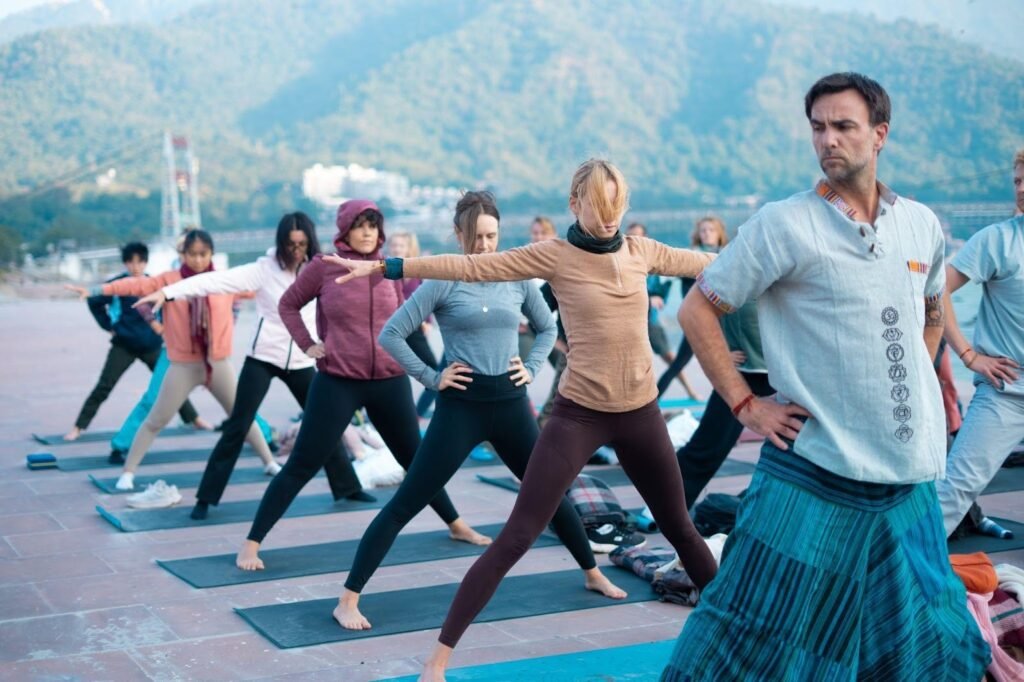
Whether you choose to call it in-person learning, face-to-face learning, or onsite learning, it is completely your prerogative. You get to spend time with the teachers and Gurus. If you are someone who is ideally seeking an inclusive experience, then this is it. In residential settings, you are emulating each and every behaviour of the teacher/ Guru. So, you tend to get corrections live, adjustments up front, and so on. When you are very serious about learning true yoga and seek an authentic yoga experience, residential is the key. You also get instant feedback. This helps you to perfect yourself then and there.
- Immersive Learning Experience
This is totally non-negotiable. When you are continuously put-up in a yoga space, things are always different. You get to focus exclusively on yoga practice, and not the other things. You get to forget all your worries and commitments, and that is the path towards true learning. Yoga is not just a new fitness modality, but a way of life. So, unless you are immersing yourself in it, you can imbibe the true yogi’s life. Moreover, it is not just the physical bit. Development of self-awareness and understanding your true self is one of the characteristics of yoga. It can lead to deep transformation on a cellular level.
- Community Atmosphere
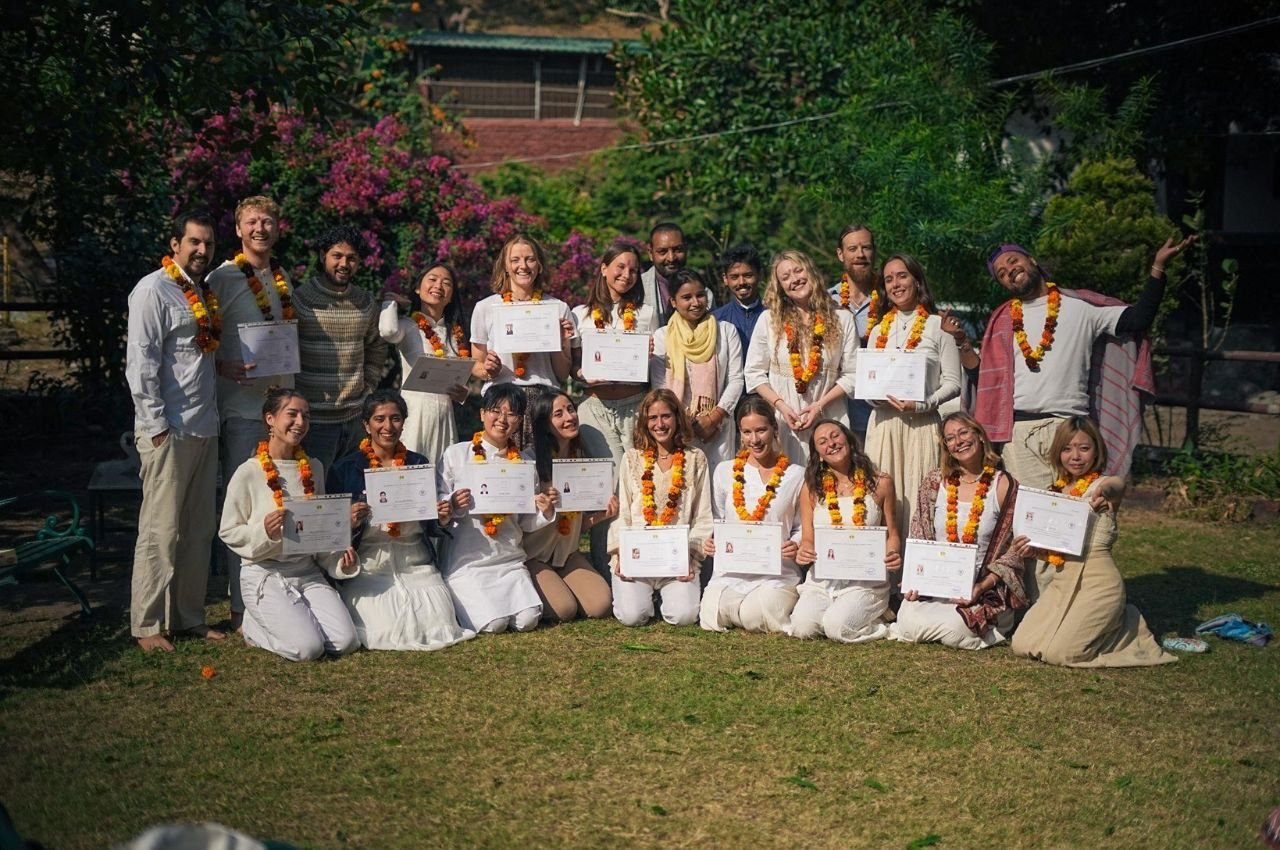
If you are looking for peer support, during yoga training, it can only be had in a group setting. And do remember, that most of you going for that YTTC have a similar mind-set. This is absolutely important, when you are enrolling for a professional and authentic yoga teacher training. You can create networks within this community. There is a chance of developing lifelong relationships as well. When you require a teaching job later, or want to change jobs, it is these people in your community who help. You can also become a part of a forum. So, while you move on with your life or start teaching, you can always post questions in community groups.
- Deeper Energy Connections
In the context of yoga, energy exchanges take place all the time. When you are doing Pranayama, for instance, this energy or ‘Prana’ is affected. This is the vital part of yogic practice. Your energy or ‘Prana’ flows through the channels of energy or the ‘nadis’. When such a thing happens, you likely experience a sense of vitality and calmness. You are made to tap into this vital resource of energy through various asanas, meditation and breath works. Conserving your energy during yoga practice is very important. You learn to listen to your body’s limits. At the residential yoga training, you learn about energy exchanges as well. At times, the energy also flows from one person to another. You can learn this only at the residential yoga TTC. Group breathing and meditations are also tools of self-development and awareness.
- Proper Discipline
When you enrol for a Yoga Teacher Training in Rishikesh, you are entering into a routine. Every day starts early, at around 5 am. Consistency in yoga practice is really essential, if you are seriously taking up yoga practice. You also learn to manage your time at the ashram. From getting up early, to purifying yourself, to having a sattvic breakfast, it can be quite quick. You have to settle down for sleep as well, by 9-10 pm. Within these hours, you are supposed to write assignments, take notes, and do the practice as well. You are motivated to do the same things back home, when you are habituated. Learning yoga is easy, but teaching it requires self-practice and conviction. So, when you enrol in a residential course in Rishikesh, you become habituated for life.
All in all, the environment is extremely supportive. Your growth and development in the yogic sense is inevitable. You will likely notice enhancement in yogic sensibilities, when you train under the direct mentorship of Gurus at the ashram in Rishikesh.
Take Away…
These are the reasons why the residential 300 Hour Yoga Teacher Training in Rishikesh, or the basic one is so beneficial. After you select the residential course at one of the best yoga schools in the Himalayas, life changes for the better.